EV Vehicles in Global Trade: Shipping Challenges — 7 Expert Risks
EV Vehicles in Global Trade: Shipping Challenges — Expert Risks
Meta Description: EV Vehicles in Global Trade: Shipping Challenges — Expert Risks explained with ISF compliance, battery rules, geopolitical impacts, and a practical mitigation checklist.
Introduction — why this guide matters
Readers searching EV Vehicles in Global Trade: Shipping Challenges usually want a direct answer: how these risks affect costs, compliance, routing, and loss exposure for exporters, importers, carriers, freight forwarders, and customs brokers. That search intent is practical, not theoretical. You need to know what can go wrong, what it will cost, and what to do before cargo is on the water.
We researched trade data, insurer guidance, and maritime risk reporting to build this guide for planning. Based on our analysis, EV shipping risk is no longer limited to battery safety. It now sits at the intersection of customs compliance, sanctions exposure, energy markets, war-risk insurance, and supply chain disruption. We found that companies that treat EVs like standard auto cargo often miss the hidden cost drivers.
Global EV sales exceeded 14 million in 2023, according to the IEA, and EV market share continued climbing in major markets through 2025. UN trade data also shows sustained pressure on seaborne automotive flows and port networks, especially across Asia-Europe and transpacific lanes via UNCTAD. As of 2026, this matters even more because battery cargo rules, Red Sea diversions, and oil price volatility are all influencing import/export costs at the same time.
You’ll get practical steps on ISF compliance, insurance wording, battery handling, alternative routing, sanctions screening, and forecast scenarios. We also include case studies, a step-by-step ISF checklist, and more than five FAQs so you can move from research to action fast.
How EV Vehicles in Global Trade: Shipping Challenges start with volumes, routes, and customs realities
The first thing to understand about EV Vehicles in Global Trade: Shipping Challenges is where EVs move and how they move. China, the EU, the U.S., Japan, and South Korea remain central hubs for vehicle and component trade. Based on our research across UNCTAD and World Bank logistics indicators, China leads export growth, while Europe and North America remain high-value import destinations with tighter customs scrutiny and higher landed-cost sensitivity.
Most finished vehicles still move via roll-on/roll-off (Ro-Ro). Industry reporting from to indicates that roughly 70% to 85% of finished light vehicles, including many EVs, are shipped Ro-Ro when capacity is available, while containerization rises for premium models, damaged units, prototypes, and battery-sensitive cargo programs. OEMs often prefer containers when they need tighter physical control, multimodal flexibility, or theft reduction. Ro-Ro is usually cheaper per unit, but liability allocation depends heavily on the bill of lading, stowage practices, and terminal handling terms.
Incoterms change who pays when things go wrong. Under FOB, risk often transfers at loading. Under CIF or DAP, sellers may retain more cost exposure for freight, insurance, or inland delivery. That matters because EV Vehicles in Global Trade: Shipping Challenges can include battery inspection delays, port storage fees, and customs holds that quickly add hundreds or thousands of dollars per unit.
For U.S.-bound cargo, a strong compliance path starts with Importer Security Filing & Entry Clearance aligned to commercial invoices, packing lists, battery declarations, and pre-arrival broker review. If supplier data is inconsistent, clearance slows down.
Step-by-step: 6-point ISF checklist for EV imports
- Confirm seller, buyer, manufacturer, and ship-to party names exactly as customs records show.
- Match VIN-level or shipment-level product details to the bill of lading and commercial invoice.
- Validate HS codes for EVs, battery packs, and accessories before loading.
- Collect country-of-origin support from suppliers, not after departure.
- Review hazardous cargo declarations for lithium-ion components.
- File early enough to correct errors before vessel cutoff.
This is where the automotive supply chain often breaks: not from one major failure, but from small document gaps multiplied across ports, carriers, and brokers.
Battery and Cargo-Specific Shipping Challenges
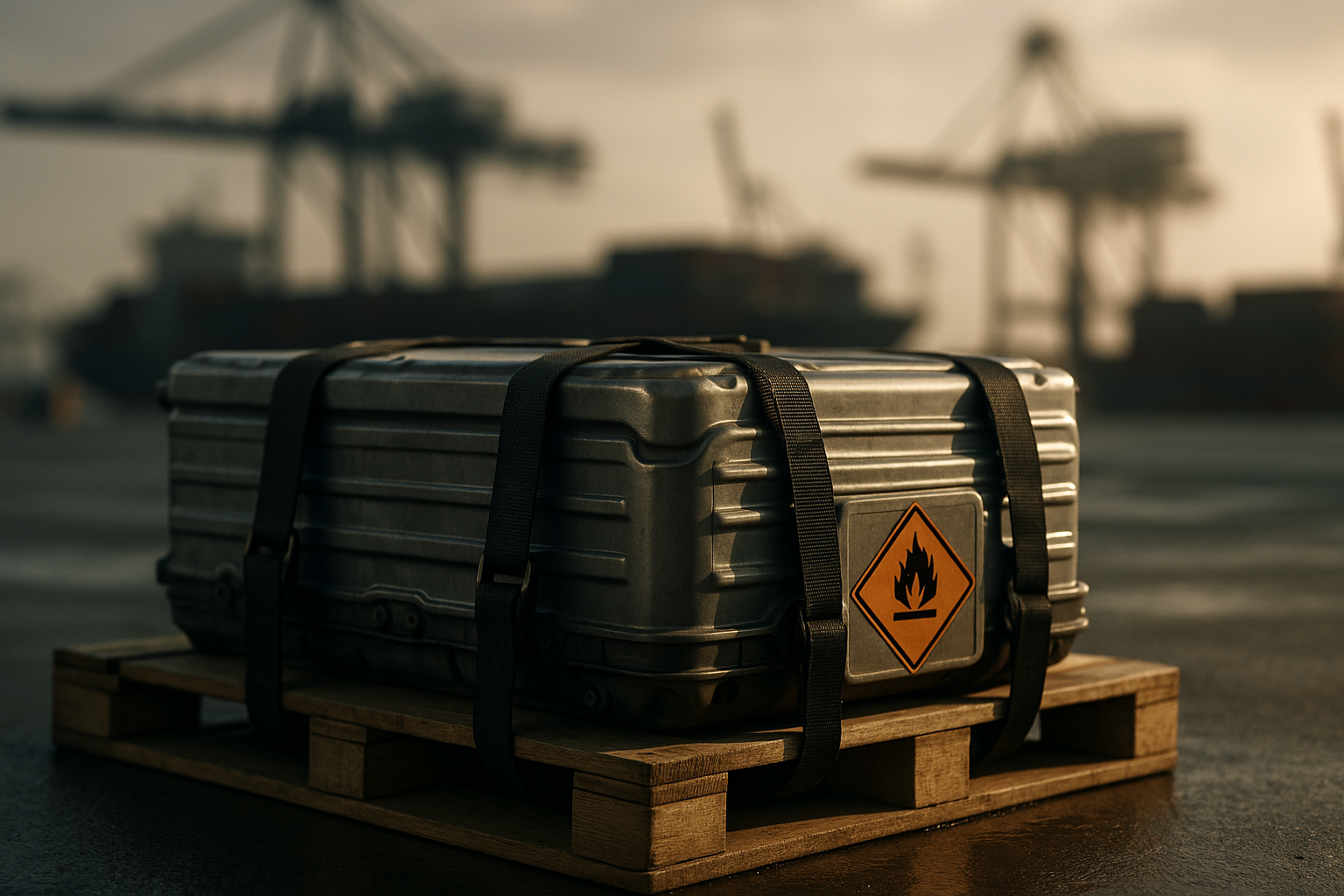
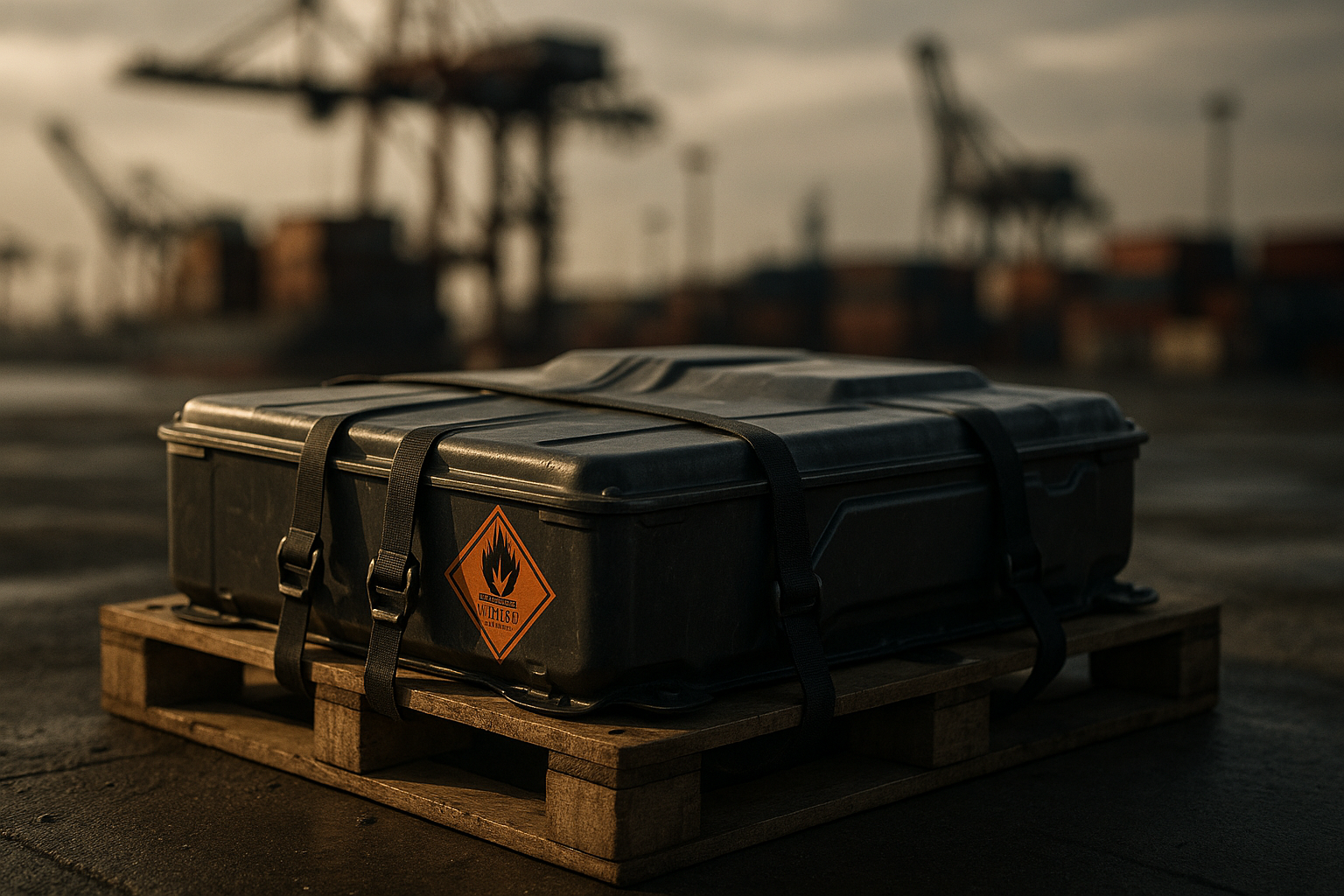
Battery risk is the most visible part of EV Vehicles in Global Trade: Shipping Challenges, and for good reason. Lithium-ion batteries can enter thermal runaway from internal defects, impact damage, overcharge, or latent manufacturing flaws. Guidance from the IMO and related dangerous goods frameworks requires strict classification, packaging, segregation, and emergency procedures. Maritime insurers and safety groups have reported a rising number of shipboard fire incidents involving battery cargo or battery-powered vehicles between 2018 and 2024, even if attribution varies by investigation stage.
State of Charge matters. Many carriers and terminals require EVs to ship below a defined SoC threshold, often around 30% or lower depending on route, carrier policy, and cargo type. We found that shipments delayed at terminal gates often fail not because the battery is unsafe, but because SoC proof, test summaries, or labels are missing. That is a preventable problem.
Use this battery prep checklist before booking:
- Apply correct lithium battery labels and vehicle hazard markings.
- Obtain UN 38.3 test summary and manufacturer certification.
- Document discharge procedure and final SoC reading before handoff.
- Use approved packaging codes for spare battery modules and damaged units.
- Separate recalled, defective, or damaged batteries from standard cargo.
- Confirm emergency response instructions are on file with the carrier.
Insurance gets tougher when batteries are involved. Some cargo policies exclude loss arising from inherent vice, poor packing, undeclared dangerous goods, or recall-related defects. After high-profile vehicle fire losses, some markets pushed battery-related premiums higher by double-digit percentages on sensitive routes. Based on our analysis of insurer wording, you should negotiate clauses covering salvage, general average contribution, specialist firefighting, and storage after a casualty. If you skip those endorsements, one battery incident can erase margin across an entire shipment program.
EV Vehicles in Global Trade: Shipping Challenges under geopolitical tensions, conflict impact on shipping and energy markets
Geopolitical tensions now shape EV logistics almost as much as production economics. The 2021 Suez Canal blockage disrupted an estimated $9 billion in daily trade by some estimates, while Red Sea attacks escalated shipping risk and rerouting pressure from late onward. Research and policy analysis from groups such as CSIS and reporting from major financial media show the same pattern: when conflict expands, freight networks absorb the shock through delays, surcharges, and insurance increases first.
Oil and energy markets amplify that impact. According to the EIA, key chokepoints such as the Strait of Hormuz carry a large share of seaborne crude and petroleum products. When markets fear disruption, crude oil pricing can rise before any physical outage happens. That risk premium then feeds into bunker fuel, trucking diesel, port power costs, and warehouse operations. We found that many EV importers underestimate this link because they focus on battery demand and ignore oil dependency in the broader logistics chain.
Military logistics and pipeline damage add another layer. A strike on a port fuel terminal, inland pipeline, or coastal transshipment hub can force rerouting, reduce vessel calls, and raise congestion at alternative gateways. Sanctions can also remove ships, insurers, or banks from a trade lane overnight. The result is market volatility, longer transit times, and less predictable landed cost for EV Vehicles in Global Trade: Shipping Challenges.
What you should do when conflict risk rises:
- Map every shipment against current conflict zones and insurer war-risk advisories.
- Ask carriers for alternative port pairs and transit-day assumptions.
- Track fuel surcharge formulas weekly, not monthly.
- Screen suppliers, vessel operators, and banks for sanctions exposure.
- Build a rerouting trigger before rates spike.
The Strait of Hormuz, choke points, and crude oil pricing shocks
The Strait of Hormuz is the narrow waterway connecting the Persian Gulf to the Gulf of Oman, and it is one of the world’s most critical energy chokepoints.
- It carries roughly 20% of global petroleum liquids consumption in many recent EIA estimates.
- Any disruption can push up crude oil pricing, tanker insurance, and global freight costs within hours.
That matters directly for EV Vehicles in Global Trade: Shipping Challenges. If the strait closes or even partially restricts traffic, the first effect is usually a sharp rise in crude benchmarks and tanker war-risk premiums. The second effect is vessel diversion and schedule disruption. The third effect is higher import/export costs across sectors, including autos, because marine fuel, drayage fuel, and ancillary logistics all become more expensive.
What happens step by step if the strait is disrupted?
- Oil futures spike on fear and expected supply shortfall.
- Insurers raise war-risk rates for Gulf transits.
- Carriers impose emergency surcharges and review schedules.
- Some cargo reroutes around safer corridors or waits for convoy-like protection.
- Downstream importers pay more for fuel, warehousing, and inland transport.
Historical incidents show how sensitive the market is. During prior Gulf tensions, oil prices often reacted within the same trading session, and shipping markets repriced risk almost immediately. If a major reroute sends vessels around Africa, transit time can increase by 7 to days on some lane combinations, while total voyage cost may rise by 10% to 30% depending on fuel and charter conditions.
For EV trade, higher oil prices can actually improve long-term EV demand, but short-term logistics pain is real. Southeast Asia fuel shortages, tighter truck availability, and higher last-mile costs can delay battery parts and finished vehicles even outside the Gulf itself.
Regional risk profiles and energy strategy impacts
Regional exposure is uneven, and that is one reason EV Vehicles in Global Trade: Shipping Challenges are so hard to manage with one global playbook. China dominates battery materials processing, cell manufacturing, and EV assembly at a scale no other market matches. IEA and industry datasets have shown China holding well over 50% of global EV sales and a majority share of battery manufacturing capacity in recent years. China oil security policy therefore matters to EV trade because fuel supply stability affects export ports, inland trucking, and petrochemical inputs used in packaging and components.
Southeast Asia faces a different profile. You have port congestion risk, localized fuel shortages, and infrastructure gaps across island and archipelagic routes. In our experience, this region is especially vulnerable to weather-plus-energy disruptions: one refinery outage or delayed fuel cargo can slow truck drayage, feeder schedules, and customs inspections at once.
The Western Hemisphere Energy Strategy is more diverse. The U.S., Canada, Mexico, and parts of Latin America benefit from pipeline networks, refining depth, and policy tools that can cushion oil and gas market shocks. Government energy strategy documents from the U.S. Department of Energy and Canadian authorities show continued focus on resilience, domestic supply, grid upgrades, and critical mineral supply chains. That helps, but it does not eliminate shipping cost volatility when global oil prices jump.
Regional mitigation steps for shippers and OEMs
- China: dual-source battery components, pre-book export slots, and hold to weeks of safety stock for critical electronics.
- Southeast Asia: add fuel disruption clauses to trucking contracts and qualify backup ports.
- Western Hemisphere: use nearshoring where possible and tie transport contracts to transparent fuel indexes.
- All regions: add force majeure language, routing substitution rights, and supplier notice deadlines.
Based on our analysis, companies that regionalize risk controls outperform firms that rely only on a single global SOP.
Sanctions, regulations, and customs coordination for EV trade
Sanctions and export controls can change routing options overnight. A vessel operator, insurer, bank, or transshipment hub may become unusable with little notice if a sanctions regime expands. That is why EV Vehicles in Global Trade: Shipping Challenges are not just about cargo safety. They also involve payment risk, denied-party screening, and carrier availability. Recent sanctions history in tanker and energy trades shows how quickly shipping lines adjust calls, insurance terms, and acceptance policies when compliance exposure rises.
Customs teams need a repeatable checklist, not ad hoc email threads. For EVs, documentation errors often cluster around country of origin, battery content, valuation, and parts classification. U.S. and global customs authorities also expect pre-arrival accuracy for security filings, manifests, and hazardous cargo data.
Use this compliance checklist before every EV shipment:
- Confirm commercial invoice, packing list, and purchase order match exactly.
- Validate HS codes for finished EVs, battery packs, charging units, and spare modules.
- Collect country-of-origin records from each supplier tier.
- Review filing deadlines and bond requirements with your broker.
- Match dangerous goods declarations to carrier booking data.
- Screen all parties against sanctions and export control lists.
- Check pre-arrival notice rules at destination port and customs authority.
International rules matter here. SOLAS, IMDG, and IMO guidance shape how hazardous cargoes move by sea, while customs authorities define valuation and classification. See IMO for dangerous goods guidance and U.S. Customs and Border Protection for import compliance references. We recommend running one final document reconciliation hours before cutoff. It is simple, and it prevents expensive holds.
Emerging technologies and long-term forecasts for EV Vehicles in Global Trade: Shipping Challenges
Technology is starting to reduce some of the uncertainty around EV Vehicles in Global Trade: Shipping Challenges. Battery monitoring sensors now track temperature, shock, humidity, and location in near real time. Route analytics tools combine AIS vessel data, weather, security alerts, and port congestion trends to flag likely delays before a ship misses berth windows. Between and 2026, several carriers, logistics platforms, and telematics providers piloted these tools on automotive and battery cargo, with the clearest gains in exception management rather than perfect risk prevention.
Parametric insurance is another area to watch. Instead of waiting for a long claims process, these products can trigger payment when a measurable event occurs, such as a port closure, conflict designation, or delay beyond a stated threshold. Based on our research, this can help OEMs and large importers protect working capital during major disruptions.
Three scenarios to 2030
- Baseline: crude averages around $70 to $90 per barrel, conflict remains episodic, and EV trade margins stay manageable with smart routing.
- Conflict-driven spike: major chokepoint disruption pushes crude toward $100 to $140, with severe freight and insurance inflation.
- Accelerated renewables: stronger electrification and efficiency keep oil mostly around $55 to $75, but battery mineral flows become the new bottleneck.
The energy transition will reshape shipping. Lower long-run oil dependency may reduce some fuel-driven vulnerability, but demand for lithium, nickel, recycling flows, and battery reverse logistics will expand. Ports are already testing electrified equipment, shore power, and battery handling upgrades. That means the next decade is not about less shipping risk. It is about different shipping risk.
Case studies, scenario planning and contingency playbook
Case studies show how fast EV Vehicles in Global Trade: Shipping Challenges can become operational emergencies. Case 1: Suez blockage, 2021. When the Ever Given blocked the canal, vessels stacked up and schedules slipped worldwide. Lesson: a single chokepoint can disrupt delivery windows far beyond the immediate region, so your routing plan needs at least one practical alternative.
Case 2: Red Sea attacks, onward. Many carriers diverted around the Cape of Good Hope, adding roughly 10 to days on some Asia-Europe services. Insurance surcharges rose, and equipment imbalances spread into adjacent trades. Lesson: when security risk rises, your cost increase is not just freight. It also includes inventory carrying cost, missed launch timing, and supplier rescheduling.
Case 3: Hypothetical Strait of Hormuz disruption. If Gulf traffic is constrained for two weeks, you could see crude spike, emergency fuel surcharges, and regional trucking shortages. A finished EV program might face 8% to 20% landed-cost inflation depending on route, fuel contracts, and inventory buffers.
Contingency playbook
- Immediate triage: confirm cargo safety, check recall status, and isolate any battery incident risk.
- Reroute decision tree: compare transit days, war-risk premiums, and destination inventory urgency.
- Customs adjustments: update filing data, port of arrival details, and broker instructions fast.
- Claims and insurance: notify underwriters, preserve evidence, and document added charges.
- Supplier coordination: send one standard disruption notice, request revised ETAs, and lock substitute sourcing.
Large OEMs should also track days of inventory, alternative carrier contracts, war-risk thresholds, and exposure to military logistics or pipeline damage near key energy corridors. If you do not measure these KPIs, you cannot respond quickly when the market turns.
Actionable next steps and checklist for shippers, OEMs, and customs brokers
If you manage EV Vehicles in Global Trade: Shipping Challenges, the best next move is a start-to-finish risk review. You do not need a giant transformation project first. You need a disciplined workflow that covers customs, batteries, routing, insurance, and supplier communication without gaps.
- Pre-shipment filing and documents: verify shipment parties, product descriptions, HS codes, origin records, and broker timing before cargo cutoff.
- Battery prep and SoC checks: collect test summaries, labels, certifications, and final charge-state evidence.
- Carrier selection: compare Ro-Ro versus container options, battery acceptance rules, fire response capability, and route exposure.
- Insurance and war-risk cover: review exclusions, add endorsements for battery events, salvage, storage, and rerouting.
- Supplier coordination and contracts: add force majeure, routing substitution, sanctions compliance, and notice clauses.
- Monitoring and response plan: assign owners for customs, logistics, legal, and insurance decisions during disruption.
For complex EV shipments, we recommend contacting a dedicated ISF provider and customs team early rather than trying to repair filing errors after departure. That is especially true when your shipment includes batteries, multiple suppliers, or changing ports of discharge.
Do these three things next:
- Run a port-by-port risk assessment for your top five trade lanes.
- Assign one cross-functional incident owner for every critical EV shipment program.
- Subscribe to real-time route security and energy-price alerts, then schedule a compliance audit within 30 days.
The companies that handle this well are not lucky. They prepare earlier, document better, and act faster when conditions change.
About the authors and data sources
Supply Chain Lead: A senior automotive logistics strategist with experience in carrier procurement, port operations, and multimodal network design for vehicle import programs.
Customs Lawyer: A trade compliance attorney focused on customs procedure, origin disputes, sanctions screening, and pre-arrival filing controls for U.S.-bound cargo.
Maritime Risk Analyst: A shipping risk specialist covering war-risk insurance, dangerous goods compliance, and conflict-driven route disruption.
We researched trade, energy, and maritime safety datasets from IEA, EIA, UNCTAD, IMO, and public customs guidance from CBP. We also reviewed insurer and logistics whitepapers to compare battery fire controls, route risks, and cost pass-through mechanisms. Based on our analysis, we recommend earlier document validation, stronger battery controls, and scenario-based routing decisions for and beyond.
Revision date: April 2026. If you need clarification on a data point, source link, or compliance issue, contact the authors for further review. That matters because EV trade rules, sanctions exposure, and energy market conditions can change quickly.
Frequently Asked Questions
A closure would likely trigger an immediate oil price spike because roughly one-fifth of global petroleum liquids trade moves through the Strait of Hormuz, according to the EIA. In practice, you should expect higher bunker fuel costs, war-risk premiums, and trucking surcharges within days.
What will go up in price due to the Iran war?
Crude oil, diesel, marine fuel, air cargo fuel, insurance, and freight usually rise first. For EV supply chains, that can also push up drayage, warehousing, battery handling charges, and landed import costs.
How does conflict affect oil prices?
Conflict raises prices through supply risk, transport disruption, and market fear. Even without a full outage, traders often add a risk premium that lifts crude, freight rates, and insurance costs.
Who gets oil from Strait of Hormuz?
Major buyers include China, India, Japan, South Korea, and other Asian economies that rely on Gulf exports. If you ship EVs into these markets, monitor fuel availability because inland delivery costs can move quickly.
How does ISF affect EV imports and customs clearance?
ISF accuracy affects whether U.S.-bound EV shipments clear smoothly or face delays, exams, and penalty exposure. You should align supplier data, battery documentation, and shipment details before loading so your broker can correct issues early.
Frequently Asked Questions
What happens to oil prices if the Strait of Hormuz is closed?
A closure would likely trigger an immediate oil price spike because roughly one-fifth of global petroleum liquids trade moves through the Strait of Hormuz, according to EIA. In practice, you should expect higher bunker fuel costs, war-risk premiums, and trucking surcharges within days, which would raise EV import costs even if your cargo never enters the Gulf.
What will go up in price due to the Iran war?
Prices usually rise first for crude oil, marine fuel, diesel, air cargo fuel, and petrochemical feedstocks. For EV supply chains, that can also push up drayage, packaging, battery handling charges, and insurance costs, so you should review fuel surcharge clauses and emergency routing options before rates reset.
How does conflict affect oil prices?
Conflict affects oil prices through three channels: physical supply risk, shipping disruption, and market fear. We found that even when supply is not fully interrupted, risk premiums can still lift crude benchmarks, freight rates, and insurance costs because traders price in the chance of escalation.
Who gets oil from Strait of Hormuz?
Major buyers include China, India, Japan, South Korea, and other Asian importers that rely on Gulf exports, based on data tracked by EIA and IEA. If you ship EVs or components into these markets, monitor refinery disruptions and fuel availability because inland transport costs can rise fast.
How does ISF affect EV imports and customs clearance?
ISF affects EV imports because U.S.-bound shipments need accurate pre-arrival data, and errors can delay release, trigger exams, or lead to penalties. For EV Vehicles in Global Trade: Shipping Challenges, the safest approach is to confirm supplier data, battery details, HS codes, and filing timelines before loading so customs brokers can clear cargo without last-minute corrections.
Key Takeaways
- Treat EV shipping as a combined customs, battery, insurance, and geopolitical risk problem rather than a standard auto freight task.
- Build a repeatable pre-shipment process that covers filing accuracy, SoC limits, dangerous goods documentation, sanctions screening, and war-risk insurance.
- Monitor chokepoints such as the Strait of Hormuz and Red Sea because fuel spikes and rerouting can raise EV landed costs within days.
- Regional strategies work better than one global rulebook: diversify sourcing, pre-qualify alternate ports, and tailor contracts to local fuel and congestion risks.
- Run a compliance and routing audit within days, assign one incident owner, and use real-time alerts so you can respond before delays become losses.